
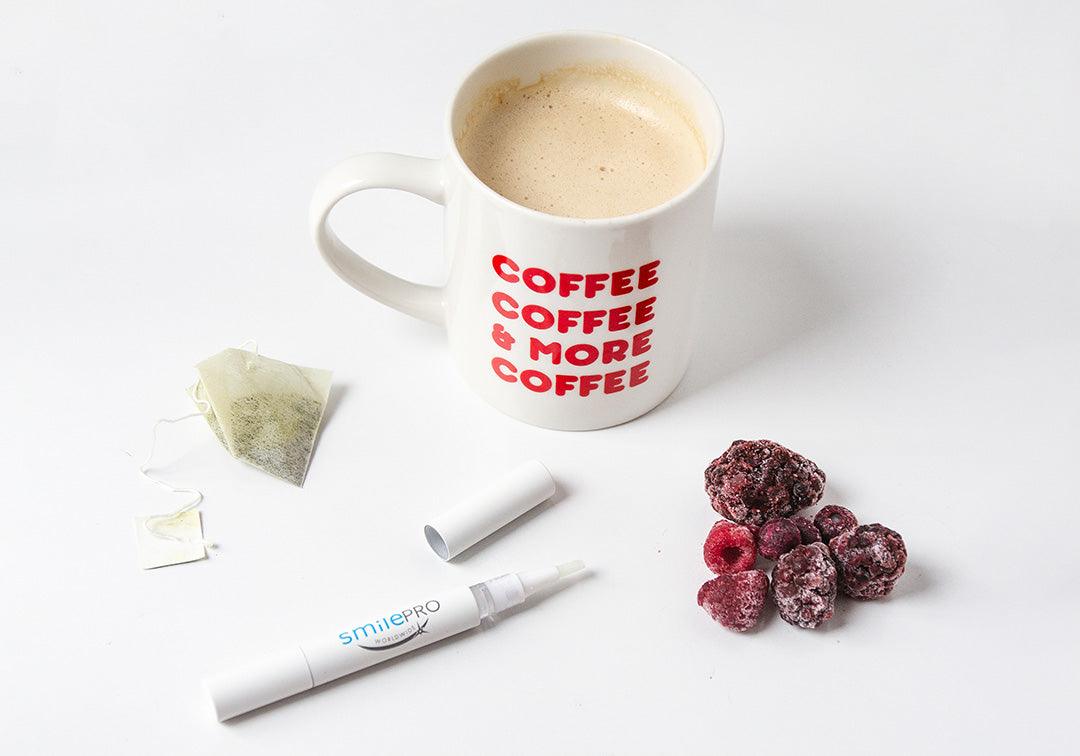
The foods and drinks most likely to stain your teeth are coffee, tea and red wine, followed by blackcurrant and other deeply coloured drinks. Acidic food and drink, such as fizzy drinks, fruit juice, citrus fruit and wine, adds to the problem by softening the enamel. You do not have to give any of them up: drinking water alongside them, having them with meals and brushing twice a day all help keep your smile brighter.
This guide covers everyday staining: which foods and drinks cause it, why, and the simple habits UK dental guidance recommends. If you have just finished a whitening treatment, the rule is different and shorter: see our teeth whitening aftercare guide.
Why do some foods and drinks stain teeth?
Some foods and drinks are deeply coloured, and the colour builds up on the surface of your teeth over time. The Oral Health Foundation names tea, coffee, red wine and blackcurrant as common causes of surface staining. Acid adds to it: every time you have something acidic, it temporarily softens your enamel, which the Oral Health Foundation says increases the risk of both sensitivity and staining.
So there are two things to watch: colour, which leaves stains on the surface, and acid, which softens the enamel and makes staining more likely.
The 10 foods and drinks that stain teeth most
- Coffee. The NHS lists coffee among the drinks that can stain teeth. Love your coffee? Read teeth whitening for coffee lovers.
- Tea. Black tea in particular, according to the Oral Health Foundation, which suggests drinking water alongside it to help reduce staining.
- Red wine. Deeply coloured and acidic, and named by both the NHS and the Oral Health Foundation.
- Blackcurrant. Blackcurrant drinks are on the Oral Health Foundation's list of surface stainers.
- White wine. Lighter in colour, but the Oral Health Foundation notes that both red and white wine are highly acidic and can contribute to erosion and staining.
- Fizzy drinks. Cola, energy drinks and sports drinks are acidic, and even sugar-free fizzy drinks can harm teeth because of their acid content, says the Oral Health Foundation.
- Fruit juice. Even 100% fruit juice is acidic and can wear enamel, especially when sipped throughout the day.
- Citrus fruit. Oranges, lemons, limes and grapefruit are high in citric acid.
- Tomato sauces. Tomatoes and tomato-based sauces are naturally acidic; the Oral Health Foundation suggests rinsing with water after a tomato-based meal.
- Vinegar-based foods. Pickles, dressings and sauces made with vinegar can be highly acidic.
How can you stop food and drink from staining your teeth?
Drink water alongside or after food and drink that can stain, have acidic drinks with a meal rather than sipping them, and brush twice a day with a fluoride toothpaste. These are the simple habits the Oral Health Foundation and the NHS recommend, and none of them means cutting out the foods you enjoy.
- Drink water with coffee, tea and wine, and after acidic meals.
- Use a straw for acidic drinks, which the Oral Health Foundation says reduces contact with your teeth.
- Have sugary or acidic drinks with a meal, not throughout the day.
- After eating, wait at least an hour before you brush: acid softens enamel, and the Oral Health Foundation says brushing straight away can damage it.
- Brush last thing at night and at least one other time a day for about 2 minutes, and clean between your teeth every day.
- Use a whitening toothpaste: the Oral Health Foundation says whitening toothpastes are good at removing staining, although they do not change the natural shade of your teeth. SmilePro Whitening Toothpaste helps lift everyday surface stains.
Do you have to give up coffee and red wine for white teeth?
No. The Oral Health Foundation's advice is about moderation and habits, not banning foods: drink water alongside staining drinks, have acidic ones with meals, and keep up your brushing. If you whiten, a 10-minute top-up every 2 weeks, or once a week if you drink a lot of coffee, tea or red wine, helps stop new stains building up.
What can you eat and drink straight after teeth whitening?
After each treatment, wait 1 hour before eating or drinking anything except water. After that hour you can eat and drink as normal, including coffee and tea; rinse with water afterwards to help your result last. Our aftercare guide has the full routine.
Can teeth whitening remove food and drink stains?
Yes, in most cases. The NHS lists stains from coffee, tea and red wine among the reasons people choose whitening, and with the SmilePro kit even years of coffee, tea, red wine and smoking stains can lift. The Oral Health Foundation notes that whitening lightens your existing shade rather than making a complete colour change. Read what causes tooth discolouration to work out which kind of staining you have.
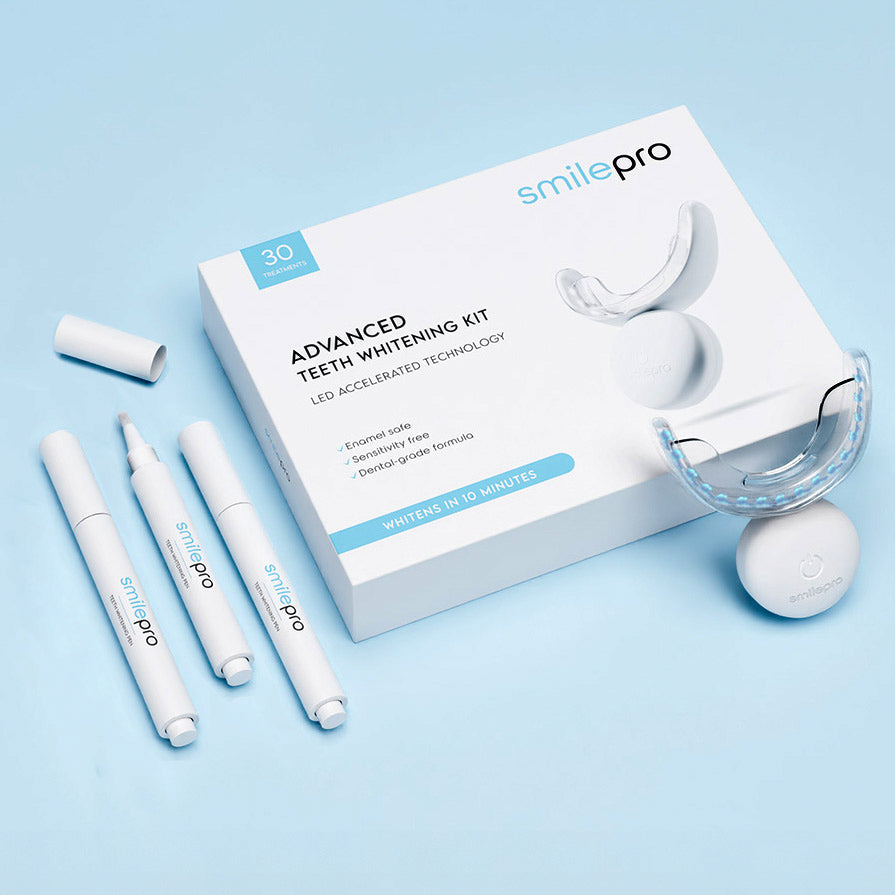
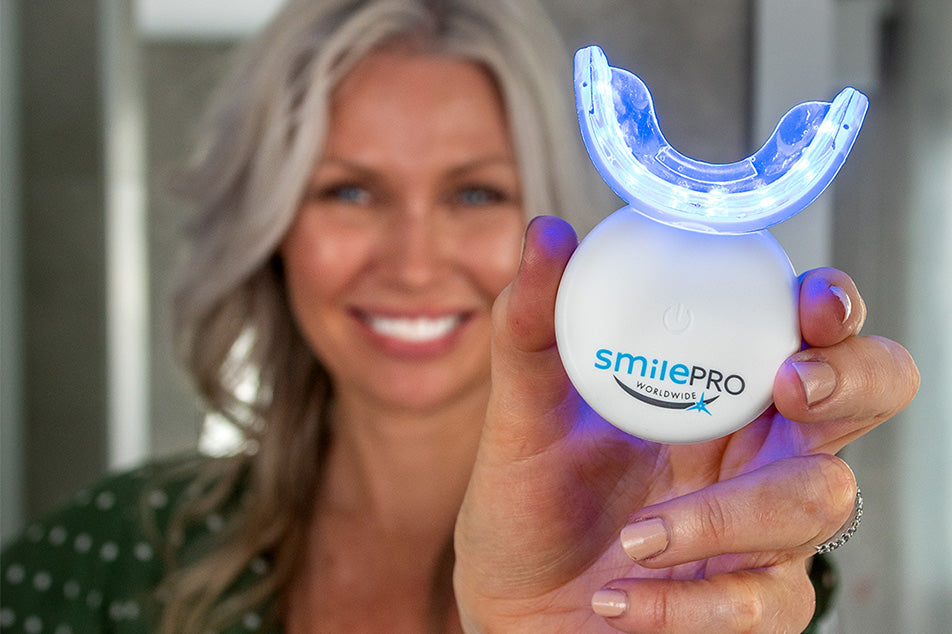
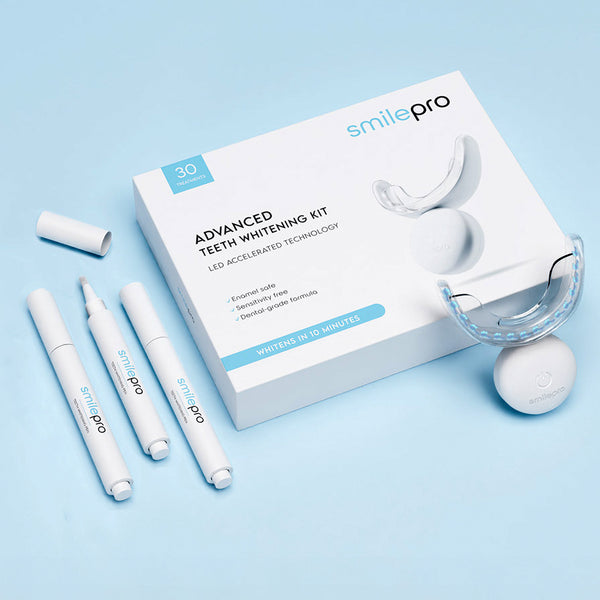
The SmilePro Advanced Teeth Whitening Kit takes 10 minutes a day for 7 days, for up to 8 shades whiter. Its gel is a peroxide-free PAP formula with potassium nitrate, used with a blue and red LED light.
Does drinking water help prevent stains on teeth?
Yes. The Oral Health Foundation recommends drinking water after sugary or acidic food and drink to rinse it away, and drinking water alongside coffee and tea to help reduce staining. Plain water and milk are the best drinks for your teeth, it says.
SmilePro whitening products are not suitable for anyone under 18, or anyone pregnant or breastfeeding. If you have sensitive teeth or unhealthy gums, see a dentist first.
Lift years of coffee, tea and red wine stains: shop the SmilePro Advanced Teeth Whitening Kit →
Sources
This guide is general information, not dental advice. If you have any concerns about your teeth or gums, speak to a dentist.
- NHS, Teeth whitening, page reviewed 19 August 2025.
- NHS, How to keep your teeth clean, page reviewed 30 June 2025.
- Oral Health Foundation, About tooth whitening, The worst foods and drinks for your teeth, Acidic foods and drinks, Diet and healthy teeth and Caring for my teeth and gums.
- SmilePro product information: Advanced Teeth Whitening Kit, Whitening Toothpaste.
Last updated: 8 October 2026.


Leave a comment
This site is protected by hCaptcha and the hCaptcha Privacy Policy and Terms of Service apply.