
Dentist whitening is faster, giving whiter teeth in one appointment, and a dentist can check your teeth first, but it is a private dental fee that costs much more. An at-home LED kit such as SmilePro takes 10 minutes a day for 7 days, whitens up to 8 shades, and costs a fraction of the price. After each treatment, wait 1 hour before eating or drinking anything except water.
If you're researching teeth whitening, you've likely found yourself weighing up two main paths: going to a dentist for professional treatment, or using an at-home kit on your own schedule. Both can deliver real results, but they differ in cost, convenience, comfort and how they fit into everyday life. This guide gives you an honest, side-by-side comparison so you can decide which makes the most sense for you.
How do the two methods work?
In-surgery dentist whitening
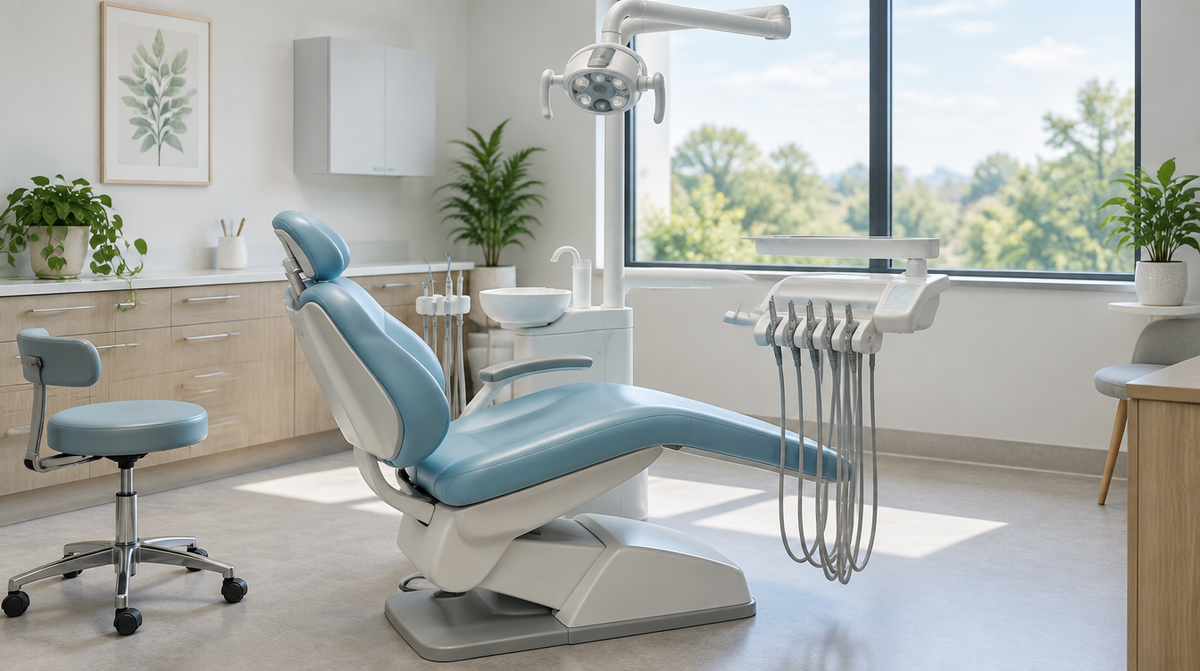
At the dental surgery, your teeth are covered in a strong whitening gel and a light or laser is shone onto them. The NHS says it is usually done in 1 appointment of around 1 to 2 hours. In the UK and EU, stronger whitening products can only be supplied to dental professionals, and only registered dental professionals may carry out whitening.
At-home LED kits
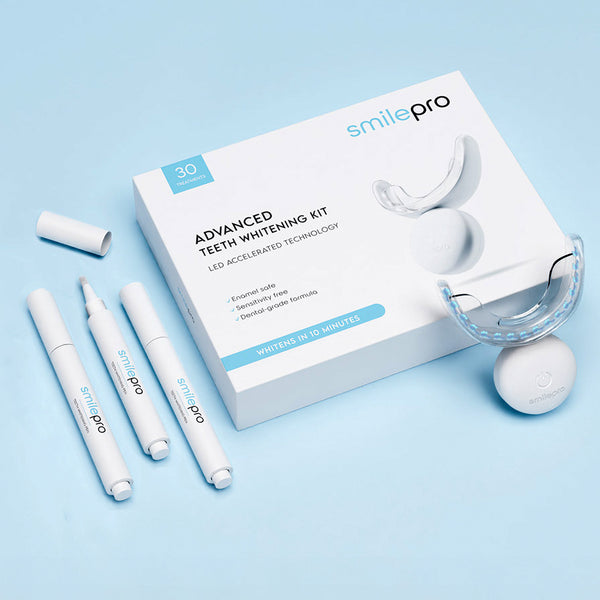
With the SmilePro Advanced Kit, you paint the whitening gel onto your teeth with a pen, then pop in the LED light with its built-in mouth tray. The blue LED speeds up the PAP gel, so each treatment takes 10 minutes, and the red LED is designed for a more comfortable treatment; the gel is always used with the light, which is UKCA and CE marked. You do one treatment a day for 7 days, and most customers see a noticeable difference after the first one.
The key difference is strength and supervision: dentists can use stronger whitening gels, in one sitting, after checking your teeth. At-home kits are made for daily use over a short course.
At-home vs dentist whitening, side by side
| In-surgery dentist whitening | At-home LED kit (SmilePro) | |
|---|---|---|
| Cost | A private dental fee, much higher than a kit | A fraction of that: see the kit page |
| Time per session | Usually around 1 to 2 hours | 10 minutes |
| Sessions | Usually one appointment | One a day for 7 days |
| Convenience | Appointment needed | At home, on your schedule |
| Speed of results | Same day | Most see a difference after the first treatment; full result in 7 days |
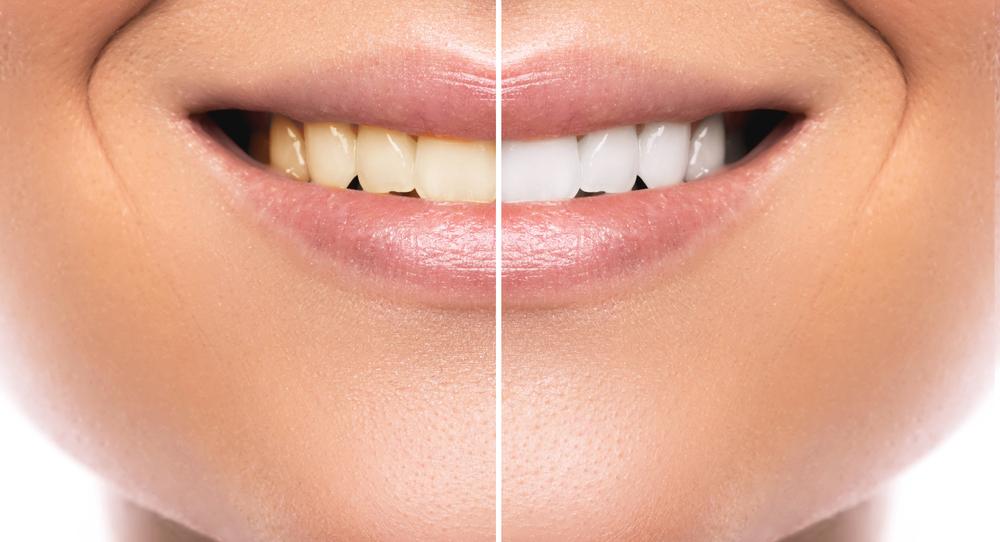
| Result | Whiter teeth after one visit | Up to 8 shades in 7 days |
| Sensitivity | A known side effect of strong gels | Gel formulated to help prevent sensitivity in healthy teeth |
| Keeping it up | A further fee for each repeat visit | A 10-minute top-up every 2 weeks with refill pens |
| Supervision | Dental professional | You, following the instructions |
How much does each cost?
For most people, price is the biggest difference. Whitening at the dentist is a private treatment, whether in the surgery or with take-home trays, and it costs much more than an at-home kit. Results are not permanent, so each repeat visit is another fee.
An at-home kit like SmilePro costs a fraction of that upfront, and keeping your result going costs only refill pens: a Whitening Pen Pack's 30 treatments last over a year at one top-up every 2 weeks.
Which gives better results?
In-surgery whitening gives the fastest change, in a single appointment. If you need whiter teeth for an event tomorrow, a dentist is your only realistic option. For general brightening, an at-home LED kit is a practical choice: SmilePro whitens teeth up to 8 shades in 7 days, and results depend on your starting shade and the type of staining.
Neither method lightens crowns, veneers or fillings, and stains deep inside a tooth may need a dentist.
Which is more convenient?
At-home whitening, clearly. In-surgery whitening means booking an appointment, travelling to a clinic and sitting in the dental chair. At home, a 10-minute treatment in the evening, while you watch TV or wind down, is all it takes, and you top up whenever you need to.
Which is better for sensitivity?
Sensitivity is one of the most commonly reported side effects of teeth whitening, whichever method you choose. The NHS lists teeth becoming sensitive to cold or sweet food and drink, and sore gums, as side effects of dentist whitening, and advises talking to your dentist if side effects bother you.
SmilePro's gel is Sensitivity-free: formulated to help prevent sensitivity in healthy teeth, with potassium nitrate in the formula, and the red LED is designed for a more comfortable treatment. If your teeth are already sensitive, or your gums are unhealthy, see a dentist before you whiten.
When does dentist whitening make sense?
- You need whiter teeth for an event tomorrow.
- You have staining inside the tooth, from an injury, a root canal treatment or certain antibiotics, which at-home whitening will not shift.
- You have sensitive teeth, gum problems or other dental issues that need a professional check first.
- You want a dentist to supervise the whole treatment.
When does at-home whitening make sense?
- You want visible results without the dentist price tag.
- You prefer to whiten on your own schedule, without appointments.
- You want to keep your result going with quick top-ups at a manageable cost.
- You have surface staining from coffee, tea, red wine or smoking.
- You want an enamel-safe gel formulated to help prevent sensitivity in healthy teeth.
SmilePro whitening products are not suitable for anyone under 18, or anyone pregnant or breastfeeding. If you have sensitive teeth or unhealthy gums, see a dentist first.
Shop SmilePro: whitening at home, without the dentist price tag →
Can you whiten your teeth without a dentist?
Yes, if your teeth and gums are healthy and you use a product that is legal where you live. At-home LED kits, strips and whitening toothpaste are all made to be used without a dentist, and the SmilePro Advanced Kit whitens up to 8 shades in 7 days with one 10-minute treatment a day. A dental check-up before you start is still a good idea, especially if you have sensitive teeth, gum problems, cracks or untreated decay.
To whiten safely without a dentist:
- Choose a product that names its whitening ingredient, lists every ingredient and is sold within UK or EU rules.
- Follow the timings exactly, and never use it more often than directed.
- Stop, rinse and pause your course if you feel discomfort, and see a dentist if it does not settle.
- Do not use whitening products for more than 14 consecutive days without a dentist's supervision.
See each step of the SmilePro routine on our How It Works page, and read Is teeth whitening safe? before you start.
What about whitening strips and toothpaste?
Whitening strips hold a whitening gel against your teeth with no light or tray: SmilePro Teeth Whitening Strips take 30 minutes a treatment and whiten up to 5 shades. Whitening toothpastes help lift everyday surface stains and are useful between treatments, but they are best for maintenance rather than a big change in shade.
The verdict
Both in-surgery and at-home whitening work. The right choice depends on your priorities:
- Need the biggest change in one sitting, or a professional check first? Choose a dentist.
- Want great value with flexible, consistent results? Choose an at-home LED kit.
- Want to keep your result between treatments? Top up at home with refill pens.
For most people, a quality at-home LED kit like SmilePro offers what they need: visible results, comfortable 10-minute sessions, and a cost that makes regular top-ups achievable. The Advanced Kit comes with a 30-day money-back guarantee (conditions apply).
Shop the SmilePro Advanced Teeth Whitening Kit, and see the difference from your first session →
Also read: Best home teeth whitening kit, how to choose the right one →
Related reading:
Sources
This guide is general information, not dental advice. If you have any concerns about your teeth or gums, speak to a dentist.
- NHS, Teeth whitening, page reviewed 19 August 2025.
- Oral Health Foundation, Tooth whitening and the law, read 7 October 2026.
- SmilePro product information: Advanced Teeth Whitening Kit, Teeth Whitening Strips, Whitening Pen Pack, and our Terms and Conditions.
Last updated: 7 October 2026.



Leave a comment
This site is protected by hCaptcha and the hCaptcha Privacy Policy and Terms of Service apply.