

Most tooth discolouration comes from surface stains left by tea, coffee, red wine and smoking. Teeth also darken naturally as you get older. Less often the colour sits under the surface, from certain antibiotics, tiny cracks that take up stains, or a tooth that has had a root filling. Whitening works well on surface stains, but staining under the surface usually needs a dentist.
Natural tooth colour varies too: the Oral Health Foundation points out that, just as hair and skin colour vary, so do teeth, and very few people have brilliant-white teeth. This guide explains the common causes of discolouration so you know what you are dealing with before you choose a treatment.
What is the difference between surface stains and stains inside the tooth?
Surface stains sit on the outside of the enamel and come from things like tea, coffee, red wine and smoking. They are the easiest to lift, with a whitening toothpaste, a professional clean or teeth whitening. Staining under the surface is part of the tooth itself, and the Oral Health Foundation lists certain antibiotics and tiny cracks that take up stains among its causes. A dentist is the right person to tell you which kind you have.
The 7 most common causes of tooth discolouration
1. Food and drink
Tea, coffee, red wine and blackcurrant can all stain the surface of your teeth, according to the Oral Health Foundation, and the NHS lists regularly having drinks such as coffee, tea or red wine as a common reason teeth become stained. See 10 foods and drinks that stain teeth.
2. Smoking
Both the NHS and the Oral Health Foundation name smoking as a cause of stained teeth, and the Oral Health Foundation says stopping smoking can help prevent discolouration and staining.
3. Getting older
Teeth can darken naturally with age, the Oral Health Foundation explains, and the NHS lists getting older as one of the main reasons people consider whitening.
4. Tartar build-up
Plaque that is not brushed away can harden into calculus, also called tartar, which the Oral Health Foundation says can affect the colour of your teeth. Once it has formed, only your dental team can remove it, so regular check-ups and cleans help.
5. Acidic food and drink
Every time you have something acidic, such as citrus fruit, fizzy drinks, fruit juice or wine, it temporarily softens your enamel. The Oral Health Foundation says this increases the risk of sensitivity and staining.
6. Certain antibiotics
Some staining sits under the surface of the tooth, and the Oral Health Foundation names certain antibiotics as one cause. This kind of staining is part of the tooth, so it does not brush away.
7. Tiny cracks and root-filled teeth
Tiny cracks in the teeth can take up stains, and a tooth that has had a root filling can go darker, the Oral Health Foundation explains. A dentist can whiten a root-filled tooth from the inside.
Which tooth stains can whitening fix?
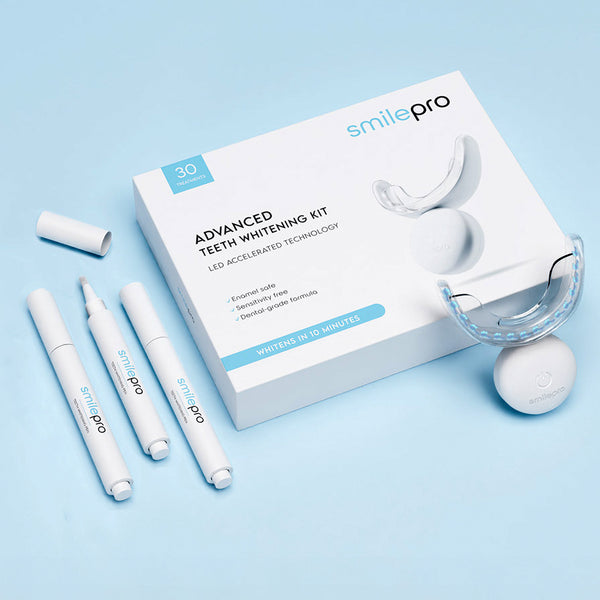
Surface stains from food, drink and smoking respond best. With the SmilePro Advanced Teeth Whitening Kit, even years of coffee, tea, red wine and smoking stains can lift, for up to 8 shades whiter in 7 days at 10 minutes a day, with a peroxide-free PAP formula. The Oral Health Foundation notes that whitening lightens your existing shade rather than making a complete colour change, and only works on natural teeth. Our Kit will not work on thin enamel, teeth affected by injury, or stains from antibiotics, and it will not whiten crowns, veneers or fillings: see does teeth whitening work on crowns and veneers?
Why is one tooth darker than the others?
If only one tooth has darkened, a root filling or a crack are two possible reasons, and both are causes the Oral Health Foundation describes. See your dentist: a root-filled tooth can be whitened from the inside, a treatment only a dental professional can carry out.
When should you see a dentist about discoloured teeth?
See a dentist before whitening if one tooth has darkened, if your teeth are sensitive or your gums are sore, or if you notice white, brown or black spots, which the NHS lists among the signs of tooth decay. The NHS also says whitening is not done on unhealthy teeth or gums, and that a dentist should check them first.
Can you prevent tooth discolouration?
You can reduce surface staining. The Oral Health Foundation suggests cutting down on food and drink that can stain, stopping smoking, and brushing last thing at night and at least one other time a day with a fluoride toothpaste; drinking water alongside coffee and tea also helps. A whitening toothpaste, such as SmilePro Whitening Toothpaste, helps lift everyday surface stains. If you have whitened, a 10-minute top-up every 2 weeks helps stop new stains settling. After each treatment, wait 1 hour before eating or drinking anything except water.
SmilePro whitening products are not suitable for anyone under 18, or anyone pregnant or breastfeeding. If you have sensitive teeth or unhealthy gums, see a dentist first.
Lift years of surface stains: shop the SmilePro Advanced Teeth Whitening Kit →
Sources
This guide is general information, not dental advice. If you have any concerns about your teeth or gums, speak to a dentist.
- Oral Health Foundation, About tooth whitening, Tooth whitening (reviewed April 2026), Caring for my teeth and gums, Acidic foods and drinks and The worst foods and drinks for your teeth.
- NHS, Teeth whitening, page reviewed 19 August 2025.
- NHS, Tooth decay, page reviewed 13 August 2025.
- SmilePro product information: Advanced Teeth Whitening Kit, Whitening Toothpaste.
Last updated: 8 October 2026.


Leave a comment
This site is protected by hCaptcha and the hCaptcha Privacy Policy and Terms of Service apply.